Crafting Simple Sentences for Young Learners
Intro
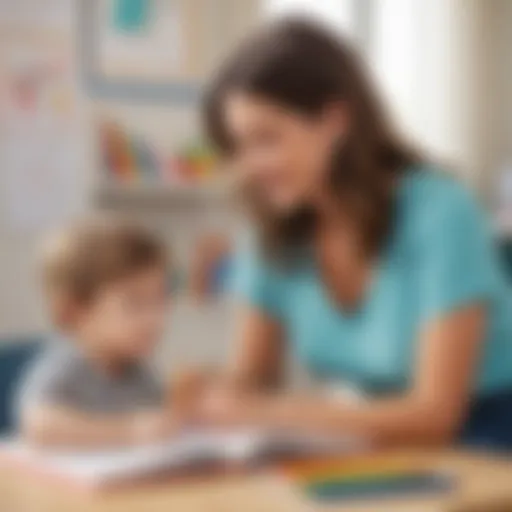
Writing is a skill that can open up a world of imagination and knowledge for young learners, especially in second grade. By mastering the art of crafting simple sentences, children can express their thoughts clearly and effectively. This article delves into practical strategies that educators and parents can use to nurture the development of writing skills among second graders. It's about more than just putting words together—it's about providing a foundation that will aid in personal expression and communication.
Creative Activities
Engagement plays a crucial role in learning how to write. Creative activities can spark a child's curiosity and encourage them to practice forming sentences in ways that feel enjoyable.
Craft Ideas
Here are a few activities that can help second graders practice sentence construction:
- Sentence Strips: Provide colorful strips of paper where children can write individual words or short phrases. They can then arrange these strips to create full sentences.
- Story Cubes: Use dice with pictures on each side. Kids roll the dice and create sentences based on the images that appear.
- Illustrated Sentence Board: Have children draw illustrations representing different simple sentences. This visual aid can help reinforce the connection between images and words.
Step-by-Step Guides
To ensure that these activities are effective, a clear step-by-step approach is recommended:
- Introduce the Concept: Explain what a sentence is and share examples of simple sentences, like "The dog barks."
- Choose an Activity: Select the activity that best suits the children's interests (e.g., Sentence Strips or Story Cubes).
- Gather Materials: Ensure you have all necessary materials ready for the activity.
- Set Clear Goals: Encourage children to create a specific number of sentences.
- Share and Discuss: Allow children to read their sentences aloud, fostering a sense of achievement and confidence.
Educational Value
Engaging in these activities not only makes learning enjoyable but also develops essential skills:
- Vocabulary Growth: Crafting sentences introduces new words in context, helping children expand their vocabulary.
- Cognitive Development: Creating sentences requires critical thinking, enhancing cognitive abilities.
- Social Skills: When children share their work, they practice communication and listening skills.
Finale
This article focused on how simple sentence crafting can be both an exciting and educational experience for second graders. By utilizing creative activities, parents and educators can develop children's writing skills in an engaging manner. Foster a love for writing early on, and children will carry these foundational skills with them throughout their academic journey.
For more resources on teaching sentence structure and writing skills, you can explore:
Prologue to Writing for Young Learners
Understanding how to write effectively for second graders is crucial. Young learners are in a stage where they are still grasping the basics of language and developing their own unique voice. Writing tailored to their needs not only aids in comprehension but also sparks their interest in storytelling and expression.
Writing for children, especially at this early stage, should idealy reflect their experiences and thoughts. The words used, the structure of sentences, and the complexity of language must resonate with their everyday encounters. This offers both relevance and a sense of belonging in their learning journey.
When educators and parents grasp the nuances of what second graders need, they can better guide them in their writing pursuits. It's about more than just putting pen to paper; it's about communicating in a way that feels natural and exciting for young minds. Furthermore, using simple language helps to foster an early appreciation for reading and writing.
"Empowering children with clear writing skills today will lay the foundation for their future literacy achievements."
This article will delve deeper into various aspects of writing for young learners, ensuring that the process is enlightening and effective. Keeping sentences straightforward helps children to be more engaged in their own learning and growing. The underlying benefit is clear: simple sentences are the bridge between thought and expression, directly influencing their overall language development.
Basics of Sentence Structure
Understanding the basics of sentence structure is crucial when working with second graders. At this early stage of language development, children are starting to grasp how sentences work. A solid foundation in sentence structure not only aids them in writing but also improves their reading and comprehension skills.
By knowing the fundamental components of sentences, young learners can express their thoughts clearly. This clarity is vital—it's like giving them a map to navigate the world of language. Additionally, grasping sentence structure cultivates their confidence, allowing them to play with words and explore their creativity.
Components of a Sentence
Subject
The subject is the heart of a sentence; it tells who or what the sentence is about. In simple terms, the subject can be a person, place, thing, or idea. For instance, in the sentence “The dog barks,” “The dog” is the subject. It’s essential for children to identify subjects because they anchor the rest of the sentence.
The key characteristic of a subject is that it’s usually a noun or pronoun. Teaching kids about subjects early on can make writing feel less daunting. It keeps their focus on who or what they are discussing, which is a beneficial approach, especially for second graders just beginning to dabble in sentence formation. A unique feature of identifying the subject is that it helps in forming questions. For example, in “Who loves pizza?” the subject becomes the focus of curiosity. Teaching them this can enhance their understanding, although they may sometimes mix it up in their eagerness to express themselves.
Predicate
The predicate is where the action happens; it tells what the subject does. In the sentence “The cat sleeps on the couch,” “sleeps on the couch” serves as the predicate. For young learners, grasping what a predicate is can transform their understanding of sentence construction.
A significant aspect of predicates is that they often contain verbs, and explaining this connection can be particularly helpful. They should know that predicates can vary from simple actions to intricate descriptions, making them versatile. In a way, predicates are like the engine of a sentence, driving it forward. However, children may sometimes struggle with understanding compound predicates or when multiple verbs are involved. A strategy is to start with simple sentences before introducing complexity.
Types of Sentences
Declarative
A declarative sentence simply states a fact or opinion. For example, “The sun is bright” is a straightforward declarative sentence. These types of sentences are a favorite among educators because they form the baseline of sentence structure. They provide clarity and help children assert their thoughts in simple terms.
One of the unique features of declarative sentences is that they can be turned into conversation starters. For instance, a child saying, “I like apples” can spark a dialogue about favorite fruits. The downside, however, is that too much focus on declarative sentences may limit a child's creativity in expression. Balancing their use with other types of sentences can lead to more dynamic language skills.


Interrogative
Interrogative sentences, or questions, are crucial for engaging in dialogue. An example is “What is your favorite color?” They encourage curiosity among young learners, making them relatable and fun. These sentences help children explore ideas and gather information, which is valuable in their growth.
Interrogatives foster a sense of interaction in learning environments. They also help kids practice their comprehension and thinking skills. However, children might sometimes struggle with the framing of questions, especially with more complicated ideas. Starting with “yes” or “no” questions might ease them into forming more complex queries over time.
Exclamatory
Exclamatory sentences express a strong emotion or reaction. For example, “Wow, that’s amazing!” They allow children to vent their excitement or surprise. In a classroom, these sentences can bring energy to conversations and create an engaging environment.
The unique feature of exclamatory sentences is their ability to convey feelings. They connect children to their emotions, which can enhance their writing by infusing it with personality and zest. However, if overused, children might rely on exclamatory statements too heavily, which can complicate their expression. Moderation is key in teaching this type effectively.
Imperative
Imperative sentences give commands or requests, such as “Please sit down.” They play an important role in everyday language and help children learn how to communicate instructions clearly. They are particularly beneficial in classroom management, as they help kids understand expectations.
Imperatives nurture cooperative behavior and are essential in collaborative settings. The downside is that children may sometimes misuse commands or misinterpret their tone. Using polite imperatives, like “Could you please…” can soften commands and instill a sense of politeness in communication.
In summary, understanding the components of a sentence, including the subject and predicate, along with the types of sentences, empowers second graders in their journey of reading and writing. This foundational knowledge paves the way for future learning pursuits.
Developing Vocabulary
When teaching second graders how to craft simple sentences, developing vocabulary plays a pivotal role. A robust vocabulary acts as the backbone of effective communication. For young learners, building this foundation is essential not just for sentence construction but also for comprehension. The right mix of words can ignite creativity and confidence, empowering children to express their ideas clearly.
Using Familiar Words
Familiarity breeds comfort. Second graders thrive on words they recognize. These words provide a safe zone where children feel more comfortable experimenting with sentence structures. For example, instead of introducing complicated words right away, employing everyday terms can promote ease of understanding. Words like “cat,” “run,” or “happy” are simple yet powerful.
- Contextual Learning: Use familiar stories or everyday experiences to introduce these words. For instance, read a passage about a picnic, and encourage children to spot words they already know. It makes learning natural and fun.
- Peer Discussions: Allow children to work in pairs or small groups. They can share sentences using known words, enhancing their engagement and reinforcing their vocabulary through interaction.
Familiar words help build confidence in sentence formation, allowing young minds to explore the world of language without overwhelming them.
Introducing New Terms
Once the children are comfortable with familiar vocabulary, it's time to gently introduce new terms. This stage can spark excitement and curiosity. However, the key lies in choosing words that seamlessly fit into their context. For example, after a lesson on “nature,” introducing the word “ecosystem” could be a good choice. It’s unfamiliar yet relevant.
- Gradual Introduction: Introduce new words in a way that feels organic. For example, if discussing seasons, terms like “hibernate” or “blossom” can come naturally through the conversation.
- Visual Aids: Use pictures or drawings to illustrate new vocabulary. When children see and hear a new word, they are more likely to remember it. Picture books can be particularly useful here.
- Make It Relatable: Connect new words to students’ personal experiences. This could involve simple examples such as, “A squirrel hibernates in winter.” When children can relate to the concept, they’re more likely to remember the word.
By focusing on both familiar and new vocabulary, educators can create a rich language environment that allows second graders to flourish. Watching their vocab grow, and consequently, their ability to construct sentences more effectively is rewarding for both the teacher and the students.
Crafting Meaningful Sentences
When it comes to helping second graders express their thoughts and ideas, crafting meaningful sentences plays a crucial role. Young learners are at a stage where they are not only developing their language skills but also beginning to understand the world around them. Thus, the sentences they create should carry substance and clarity. Meaningful sentences make communication effective, empowering children to share their feelings, stories, and knowledge with confidence.
A significant benefit of meaningful sentence construction is that it fosters comprehension. When students understand how to articulate their ideas carefully, it becomes easier for others to share in their understanding. This ability is not just important in academic settings but also in personal interactions and social environments.
Another essential consideration is the emotional connection that comes from expressing thoughts clearly. When children construct sentences that reflect their feelings and experiences, they engage more deeply with their learning. This engagement can lead to a love for writing and reading that lasts a lifetime. Moreover, crafting meaningful sentences aids students in thinking critically and encourages them to develop their voices in an increasingly noisy world.
As we delve deeper into how to support second graders in crafting sentences that resonate, we look at two key aspects: context and descriptive language. These elements will enhance their writing and improve their overall communication skills.
Context Matters
In the grand tapestry of sentence crafting, context is the thread that weaves meaning together. Understanding the setting in which a statement is made influences how a sentence is perceived. For second graders, this means recognizing the importance of the who, what, where, when, and why surrounding their writing.
For instance, consider the sentence, "The dog ran." This simple statement can lack interest or clarity without context. If positioned within the broader picture, such as in a narrative about a day at the park, it transforms into something more engaging, like "The brown dog raced across the grassy field, chasing after the squeaky toy." Here, the context amplifies the image in the reader's mind.
Encouraging young writers to think about where their sentences fit in a larger conversation helps them create more compelling narratives. Asking questions like, "What is happening around the sentence?" or "Who is involved?" motivates children to garden their sentences with richer meaning.
Using Descriptive Language
Descriptive language is the spice of writing. For second graders, using adjectives and adverbs opens up a world rich with imagery and emotion. Words like shiny, fast, tall, or gently can paint vivid pictures in the reader's mind, turning even the simplest sentence into an adventure.
Take a plain sentence like, "The cat slept." It is accurate, but it doesn’t leap off the page. However, if we tweak it with a few descriptive words, it could become, "The fluffy, orange cat curled up on the soft, sunny blanket and slept peacefully." Such improvements not only help readers visualize the scene but also allow second graders to exercise their creativity.
By guiding students to sprinkle their writing with descriptive elements, we encourage them to express their thoughts more expressively. They learn to dig deeper into the details, making their sentences lively and engaging.
"Using more descriptive language not only enhances a sentence's impact but also helps children discover the joy of expressing themselves through words."
Thus, teaching second graders to craft meaningful sentences through attentive context and vivid descriptions establishes a solid foundation for their future writing endeavors.
Techniques for Sentence Formation
In the realm of teaching second graders how to write, sentence formation stands as a crucial element. Techniques that assist in forming sentences not only help children express their thoughts but also give them the framework to communicate meaning effectively. By focusing on simple yet effective methods, educators and caregivers can cultivate the foundation for writing that will be valuable throughout a child’s academic journey. Understanding these methods is key, as they foster creativity and provide clarity which is essential at this developmental stage.
Start with a Simple Idea
When working with young learners, it's vital to begin with straightforward ideas. Simple concepts like “The dog runs” or “She plays” set the stage for children to understand the basics of sentence structure. These sentences are direct and allow students to grasp the relationship between the subject and the action without extra fluff.
To implement this, you could encourage children to draw a picture of what they want to say. For instance, if a child draws a cat, you can guide them to articulate a basic sentence about it. This approach not only makes the sentence formation engaging but also connects their thoughts visually. Here are some tips to consider:
- Keep it Relevant: Choose topics that interest the child, like their pets or favorite games.
- Use Familiar Contexts: Relating ideas to everyday life helps kids relate better.
- Limit the Complexity: Don't throw too much at them; one simple idea per sentence is a good start.
Expand with Details
Once the foundation is solid, the next step is expanding on that simple idea. This is where creativity can shine. For example, if the initial sentence is "The dog runs," it can be expanded to "The brown dog runs quickly in the park." Adding details like adjectives and adverbs can transform a bland line into something more colorful.
Here are key ways to expand sentences while still keeping them manageable for second graders:
- Adjectives: Encourage them to describe nouns. Instead of just "dog," they could say "the fluffy dog."
- Adverbs: These can clarify how actions take place. For instance, "runs quickly" gives more information than just "runs."
- Fluency and Rhythm: Promoting rhythm in sentences makes reading them more enjoyable. If the children can hear the difference in sound when details are added, they might become more invested in their writing.
The beauty of teaching sentence expansion lies in showing kids that they can be storytellers. By guiding them to express their thoughts in a richer way, you empower them with the skills they need for more complex writing tasks in the future.
"Simple does not mean dull; it’s about giving clarity and depth to a child's ideas."
In summary, mastering the techniques for sentence formation includes both starting with a straightforward idea and expanding that idea with descriptive elements. With practice and encouragement, second graders can flourish in their ability to construct sentences, laying a strong groundwork for their future writing endeavors.
Engaging Activities for Sentence Practice
Activities that involve crafting sentences can be quite the game changer for second graders. These activities not only make learning fun but also help cement the concepts of sentence structure and vocabulary in young minds. It's crucial to create environments where children feel encouraged to experiment with language, and engaging activities achieve just that. When kids are invested and excited about what they’re doing, their skills develop naturally.
"Learning through play is among the most effective ways to keep young learners engaged."
Teachers and parents should look for a mix of engaging formats – from interactive games to hands-on challenges. The following sections will delve into specific activities that can enhance sentence construction skills among young learners.
Interactive Games
Interactive games can be a real blast for second graders, turning the learning process into a playful experience. Think about it: when children play, they often don’t realize they’re learning. This mix of fun and learning can make for powerful teaching moments.
One easy game is called Sentence Scramble. In this activity, children receive a series of word cards. Their goal is to arrange these shuffled words into meaningful sentences. You can switch things up by setting a timer, encouraging friendly competition to see who can form the most sentences correctly in a given period. Not only does this encourage quick thinking, but it also reinforces memory recall of vocabulary and sentence structure.
Another engaging option is Sentence Bingo. Create bingo cards with images or words that represent different sentence components, like subjects, verbs, and objects. As you call out various components, students cover the matching item on their cards. When someone gets five in a row, they shout "Bingo!" For added complexity, you can ask them to form a complete sentence using the items they covered.
Sentence Building Challenges
Running sentence-building challenges can spark creativity and practical application of grammar rules in an exhilarating way. These challenges can be tailored to fit various themes, making them suitable for any classroom context.
One example is the Story in a Bag challenge. Fill a bag with random objects, pictures, or words. Each child takes a turn drawing something from the bag. Their task is to create a complete sentence around the item they pick. This fosters both imaginative thinking and the application of sentence structure. What's more, children will love the element of surprise each time they reach into the bag.
For simpler sentence formation, consider the Five-Word Challenge. Kids must construct sentences using just five words. This limitation pushes them to think critically about how to express their ideas concisely. They can write these sentences down and share them with the group. Such a format not only enhances their writing skills but also builds confidence when presenting their ideas to peers.
The Role of Reading in Sentence Construction
Reading plays a crucial part in a child’s ability to craft simple sentences. It’s almost like food for their brains, supplying the necessary nutrients—words and ideas—to help them grow as writers. Reading stimulates curiosity and helps children see how sentences are formed. Exposure to well-structured texts enables them to understand the flow of language and the connection between ideas. By grasping these concepts, second graders can begin to experiment with their own sentences.
There are a handful of significant reasons why reading is so important in this context:
- Enhances Vocabulary: Through reading, children can encounter new words in various situations. This expanded vocabulary provides them the tools they need to express themselves clearly and creatively.
- Fosters Understanding of Structure: As kids read different types of texts, they can appreciate how authors build sentences. It’s not only about the words; it’s about how they connect to form complete thoughts.
- Encourages Imagination: Studies have shown that being read to can trigger a child’s imagination. This imaginative thinking can lead to more detailed and dynamic sentence writing.
"Reading is to the mind what exercise is to the body."
By having a strong grasp of sentence mechanics from reading, kids are more likely to develop confidence in their writing. When they recognize the rhythm of sentences in a book, they start to replicate that rhythm in their own writing. During this learning phase, it’s also key for educators and caregivers to guide them.
Reading Aloud
Reading aloud is particularly effective because it not only allows kids to hear the sentences being formed but gives them the chance to see the text and understand punctuation, tone, and rhythm. Whether it’s a classic storybook or a modern illustrated tale, the impact of hearing someone else read is profound. Children can pick up on nuances like syntax and phrasing.
Tips for reading aloud effectively include:
- Modulate Your Voice: Using different tones can hold a child’s attention and make stories come alive.
- Pause for Emphasis: Taking a moment to pause can help children process the information and think about what is being read.
- Ask Questions: Engagement during reading creates interaction. Asking questions about the story or characters helps solidify their understanding.
Choosing Appropriate Materials
Selecting the right reading materials is just as important as the act of reading itself. For second graders, the texts need to be age-appropriate and engaging. Here are some considerations:
- Interest Level: Choose books that align with children’s interests. This makes it easier for them to relate to the content and engage with it.
- Reading Level: Ensure that the books are suited to their reading abilities. If the texts are too difficult, it can be discouraging, whereas too easy might not challenge them enough.
- Variety: Incorporating a mix of fiction, non-fiction, poetry, and narratives provides a broader view of language use.
Using these guidelines, caregivers can provide a well-rounded reading experience that significantly enhances a child's sentence crafting skills. Not only does this aid in their development, but it also lays a foundation for lifelong learning and appreciation for literature.
Assessing Sentence Skills


Assessing sentence skills is a crucial part of helping second graders hone their writing abilities. Understanding how well children can construct sentences not only sheds light on their grasp of language but also offers insights into their overall cognitive development. Tracking progress in sentence skills allows educators, parents, and caregivers to identify strengths and areas for improvement.
In essence, recognizing where students stand in their sentence construction journey is vital. This process can illuminate whether a child is confidently forming complete sentences or if they are still unsure about how to string words together meaningfully. Regular assessments can help inform instruction, ensuring tailored support for each child's unique learning pace.
Moreover, evaluating these skills boosts motivation. When children see their growth, even in small increments, it can encourage them to keep practicing and refining their ability to express themselves through writing. Acknowledging even the tiniest progress can foster a sense of accomplishment, making learning feel rewarding instead of daunting.
Additionally, introducing methods of assessment that resonate with second graders is essential. These can include simple sentence quizzes, collaborative writing activities, or interactive games that make the process dynamic and enjoyable.
"Recognizing the growth in sentence skills is like finding gold nuggets in a stream – each one signifies progress worth celebrating."
Recognizing Progress
Recognizing progress involves more than just noting if a child can construct a sentence. It’s about understanding how their abilities evolve. This can take various forms, such as watching how a student’s vocabulary expands over time or noting increased confidence in expressing their ideas.
To effectively assess progress, consider the following strategies:
- Observation: Regularly observe children as they write. Look for patterns in their sentence structures and how they use punctuation.
- Journals: Maintain a writing journal for each child. This can serve as a record of their evolving skills.
- Peer Review: Encourage students to share their sentences with one another. This interaction can provide insights into their comfort level with sentence construction.
By paying attention to these elements, parents and teachers can better understand a child’s journey with words and offer the necessary support.
Providing Constructive Feedback
Providing constructive feedback is about more than just marking errors; it’s an opportunity to guide second graders toward becoming confident writers. Instead of focusing on what they did wrong, feedback should highlight what they did well while gently suggesting areas for improvement.
Here are some practical tips for offering feedback:
- Specificity: Be specific in your comments. Instead of saying, "Great job!", you might say, "I liked how you used descriptive words in your sentences. They made your story more vivid."
- Encouragement: Balance critiques with encouragement. Everyone appreciates a good word now and then, especially young learners.
- Actionable Suggestions: Provide clear, actionable suggestions. For example, if a sentence lacks clarity, you might suggest, "Try adding more detail at the beginning to set the stage."
Constructive feedback plays a significant role in helping children feel safe and motivated to write. By fostering a positive environment for learning, children are more likely to embrace challenges and strive to improve their skills. Over time, this approach can lead to remarkable growth in their writing abilities.
Utilizing Technology for Learning
The digital age has transformed the way young learners engage with information and develop skills. For second graders, the integration of technology in learning how to craft simple sentences can serve as a powerful tool. Not only does it make the writing process more interactive, but it also caters to various learning styles, making it essential for educators and parents to harness these technological resources.
Importance of Technology in Learning
The importance of using technology for writing instruction is increasingly clear. Technology can provide instant feedback, allow for creative expression, and present writing skills in a visually appealing format. By utilizing educational apps and platforms, second graders can practice their sentence crafting in a fun, stress-free environment. Moreover, tech-savvy children may exhibit increased motivation, as they find familiarity and comfort in digital tools.
Educational Apps and Platforms
A multitude of educational applications and websites exist specifically designed to support young writers. Here are some noteworthy options that can enhance sentence creation:
- Writing Wizard: This app assists children in learning letter formation and sentence building through hands-on activities. With engaging graphics, second graders can practice while enjoying the process.
- Storybird: It allows kids to create visually appealing stories. They can select illustrations, craft sentences, and share their masterpieces with others, transforming writing into a collaborative experience.
- ABCmouse: This platform offers comprehensive lessons that include writing exercises. It uses gamified learning to appeal to second graders, making writing less intimidating.
Using tools like these can significantly enhance a child's comfort with language, enabling them to experiment with sentence structures and vocabulary in an engaging manner.
"A student can effectively explore sentence creation without the fear of making mistakes, using technology as their safety net."
Creating Digital Content
Encouraging second graders to create digital content enhances not just their writing skills but their overall comfort with technology. In an age where digital communication is paramount, equipping children with the ability to express themselves clearly in writing is essential.
- Blogging: Starting a simple blog can give students a platform to share their thoughts on topics they enjoy. This not only enhances writing skills, but also provides them a sense of ownership in their creative endeavors.
- Multimedia Projects: Combining pictures, videos, and simple text allows children to express themselves more fully. Programs like Seesaw enable kids to showcase their work in a digital portfolio format, enhancing their storytelling capabilities.
Regardless of the tool chosen, the goal remains the same: nurture a love for writing through the combination of technology and creativity. By doing so, second graders are better prepared for the demands of both academic work and future communication in an increasingly digital world.
Utilizing technology not only fosters creativity but also reinforces the importance of clear communication. With the right tech tools, second graders can take their first steps into the world of writing with confidence.
End and Future Directions
In this article, we have covered a host of strategies aimed at easing second graders into sentence construction. By focusing on simplicity and clarity, we empower educators and caregivers to foster a love for writing and improve comprehension. These strategies not only enhance vocabulary but also instill a sense of confidence in young writers.
Encouraging kids to use their voices at an early age can be both rewarding and beneficial. When students grasp how to convey their thoughts clearly through written language, it opens up worlds of understanding and creativity.
Encouragement for Continued Learning
To nurture a lifelong passion for writing, it is crucial to celebrate the little victories along the way. Children should be encouraged to express themselves without the fear of making mistakes. Engaging in frequent reading sessions and writing activities can stimulate their minds and expand their horizons. Remember, the journey of learning never truly ends. Here are some suggestions to encourage ongoing learning:
- Create a Writing Journal: Have kids maintain a journal to express their thoughts daily. This practice not only boosts creativity but helps in applying new vocabulary.
- Explore Diverse Topics: Encourage kids to write about various subjects—nature, their favorite activities, or even fictional characters. This keeps writing exciting.
- Share Their Work: Organize small group sessions where children can read their work to peers or family. This helps build confidence and reinforces their skills.
Final Thoughts on Sentence Creation
In closing, the ability to craft sentences is not just about grammar or structure—it's about communication, storytelling, and expression. Every sentence a child writes carries a piece of their perspective and imagination. When guiding them, focus on the joy of language rather than just the mechanics.
Understanding the unique needs and interests of second graders will lead to more engaging conversations about writing. It nurtures a classroom environment where students feel valued and heard. Teaching sentence creation can indeed be a transformative experience for both the teacher and learners.
Remember: Encouragement, patience, and creativity are the cornerstones of teaching writing skills to young learners.
For further resources, consider exploring sites like Reading Rockets or National Writing Project where educators share valuable insights and materials related to writing education.
By investing time and effort into teaching simple sentence construction, we prepare our children not just to complete school assignments but to articulate their thoughts in this vast, exciting world.